Freeze-dried materials
How Labs Identify a Freeze-Dried Peptide
Two white cakes look identical and have similar product codes. How would a lab tell them apart?
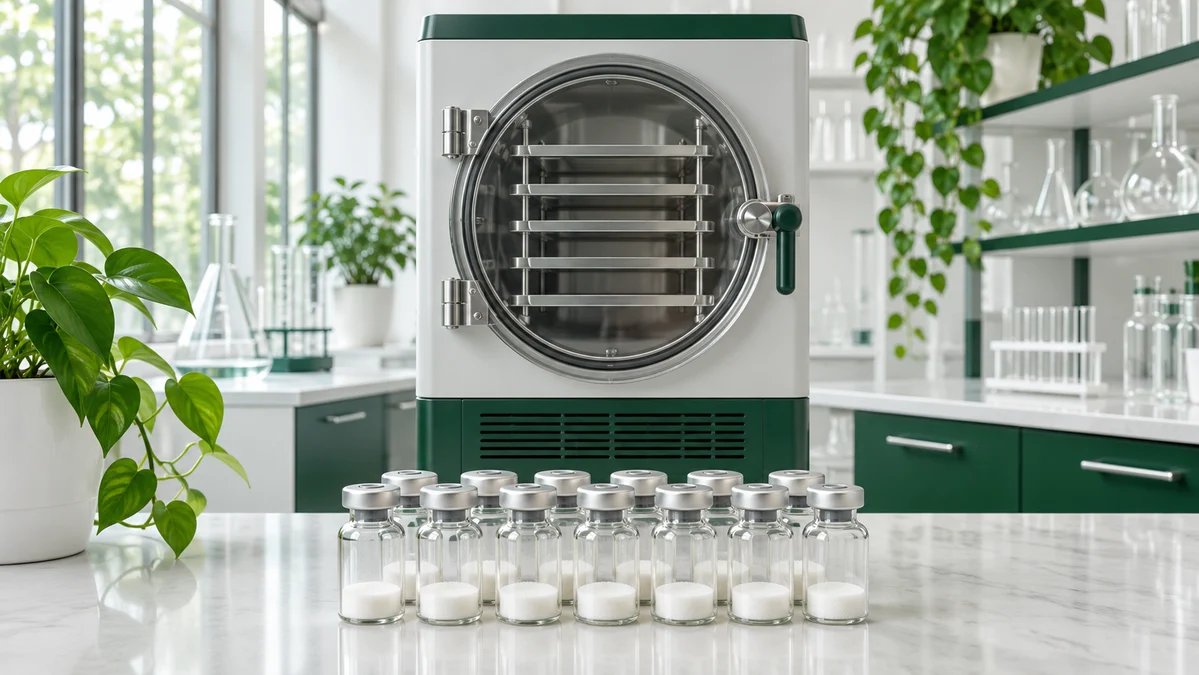
Work through the example
Match each vial to its paperwork first. Compare the measured mass to the expected target and review any complementary evidence that can distinguish similar candidates. If the vial and report cannot be linked, even a convincing spectrum leaves the sample’s provenance unresolved.
- Label and lot
- Measured molecular signal
- Independent confirmation
Establish the expected identity
Start with the material name, sequence or other identifier, specified salt and recorded lot. Labels help maintain traceability between the tube, the laboratory sample and the report.
Review the analytical method
Mass measurement can support an expected molecular mass. Fragment information or another method can add structural evidence when different compounds have similar masses. Chromatography can separate related substances when the method resolves them.
Keep the report with the sample record
Record which vial was tested, the result and any limits such as unresolved structural variants. Compare measured data with the reference and maintain the original report for future work.
What if two candidates share a mass?
A mass match can narrow the candidates. A complementary method such as suitable fragmentation or a reference comparison may be needed.