Shipping and storage
Shipping Freeze-Dried Peptides
A vial arrives dry and sealed, but the insert is crushed. Which issue matters first?
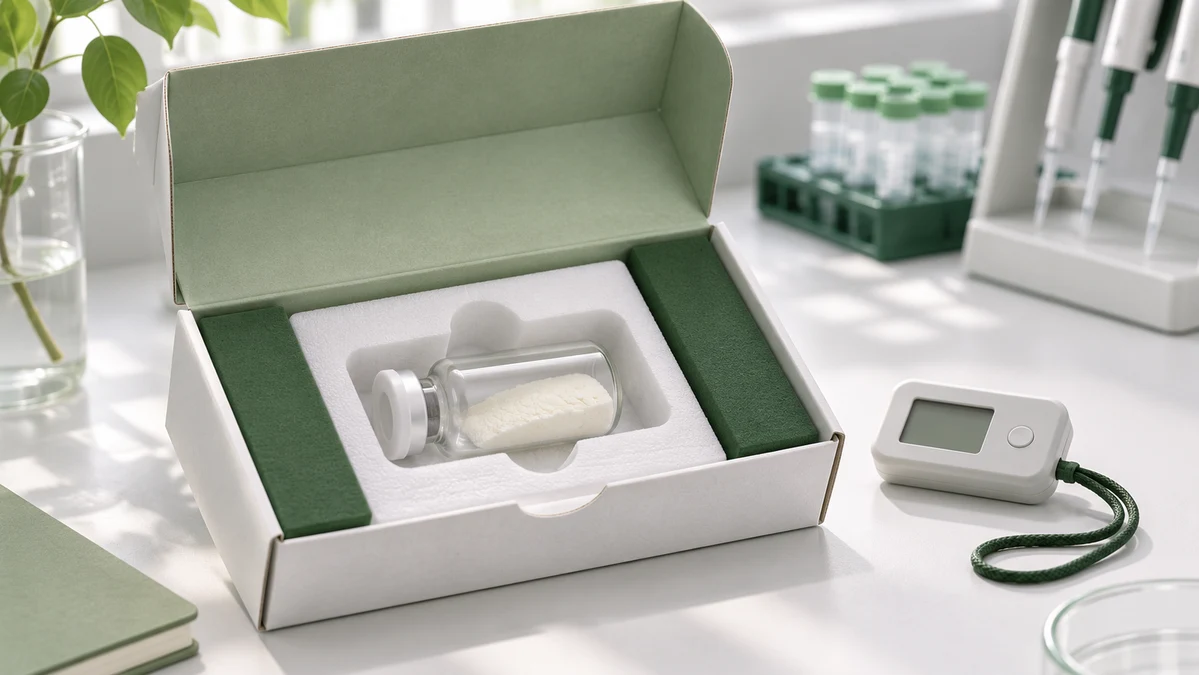
Work through the example
Inspect the immediate container and document its condition. A damaged outer insert and a compromised stopper are different observations. A receiving lab should record both and route concerns through its acceptance procedure.
- Outer parcel
- Protective insert
- Vial and closure
Why the material state matters
Removal of much of the water can improve the stability of some molecules. The potential benefit depends on the formulation and solid state. A dry vial and a solution of the same compound can have different degradation profiles.
The package is part of the evidence
A closed, intact vial protects against moisture exchange. Secondary packaging reduces risks from handling and breakage. Packaging information, elapsed transit time and logged conditions give a laboratory a clearer picture of exposure.
On arrival
Match the lot on the vial to its documents and inspect the container for damage. Log deviations and apply the laboratory’s material acceptance criteria. Reserve long-term conclusions for studies on the same formulation and storage system.
Can intact cardboard confirm an intact closure?
Inspect the primary container separately and record any uncertainty.